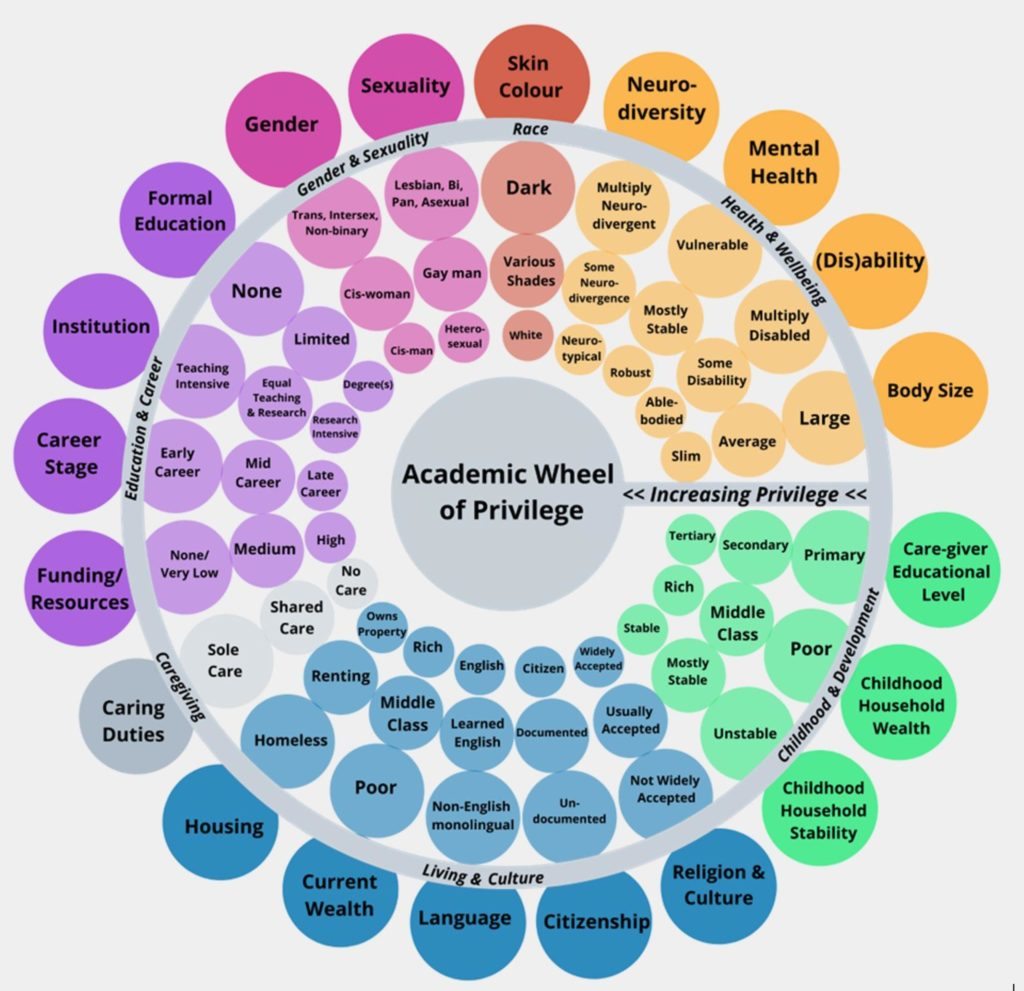
Especially in a diverse city like NYC, we see all different types of people from different places, with different pronouns, living situations, everything. No two people are the same. What a lot of people don’t recognize is that these identities change and develop over time. Especially in the preteen-young adult years when we’re experimenting, finishing/starting school, careers, families, finding ourselves, going through highs and lows. So how do we teach students going through these changes and developments? Well first let’s talk about intersectionality.
What is Intersectionality?
The image above encapsulates numerous types of identities and as you can see, they range from least to most privileged as you go farther in. Intersectionality is the identification with more than one of these identities. For one very simple example, a dark skinned woman who speaks Spanish is an intersectional identity. A lot of identities are born into and cannot be changed like your skin color, neurodiversity, ethnicity, and disability. Some are technically born into but not realized until later years like your gender identity and sexual preference. Some change depending on your actions like housing, language, education level, wealth etc. These are just a few examples. But every person identifies with a different combination of these identities and that combination changes over time.
How Do We Teach Intersectional Identities?
When teaching students, we must at the very least attempt to keep all their identities in mind. You have to consider what is accessible to them both when designing your lesson and thinking beyond your lesson when students leave the classroom. We also can’t assume that a student knows or doesn’t know something, or can or can’t do something based on their identity. One surefire way to do that is by following the Universal Design for Learning (UDL) when planning lessons. UDL ensures that everyone’s needs and identities are acknowledged but does not single anyone out. Because it is universal, everyone receives the differentiation included in the lesson.
This sounds very broad and complicated. Here are some simple strategies to include students identities into the classroom and into the lesson:
- Teach students about history that includes their identities, NOT just during their respective months– We have months and days celebrating different types of identities such as Black History Month, Pride Month, Autism Acceptance Month, Women’s Day but history did not just happen within these months and should not only be taught within these months. Only teaching about certain history in these months sends a message that students who identify with these identities are only important during these times
- When designing your lesson, differentiate for different learning needs in the classroom– this is crucial in every lesson and situation anyway because all students need to be engaged and included. But including students with different learning needs creates an inviting learning environment. Don’t just make specific worksheets for specific students. Make these differentiations available to everyone as an option. It isn’t always obvious who might benefit and some students who you don’t expect might choose these differentiated options.
- Design an “I Am” project where students identify themselves– This gives students the opportunity to creatively tell us who they are through various methods such as drawing, slide presentations, coding projects, writing, etc. This project also gives teachers a way to learn about their students who might be uncomfortable with ice breakers and telling everyone who they are.
- When assigning projects, have students work on them in class to ensure full engagement, accessibility, and success– some students aren’t able to complete work at home for various reasons such as other responsibility, lack of space, and lack of materials/resources to name a few. One way to ensure that students will be able to complete their projects is by giving them the time, space, and tools to do so. This is also ideal for group projects but works for individual projects as well
- Be accurate to history, not just the curriculum– the curriculum in some states pushes certain versions of history or deliberately make certain groups look better or worse and these ideas are then instilled into these students minds. Teachers need to be mindful and accurate to the history that actually happened because students deserve to know where their identities came from and why they are important
In classrooms where every student identifies with different combinations of identities, the theory of intersectionality is crucial to go by as it serves as a reminder that all students have different needs, types and levels of knowledge, and backgrounds that need to be acknowledged. It also reminds us that no two people think the same but that doesn’t invalidate anyone’s thoughts. When teaching, we have to try ensure our instruction and the content is beneficial to every kind of identity.

This entry is licensed under a Creative Commons Attribution-NonCommercial-ShareAlike 4.0 International license.

